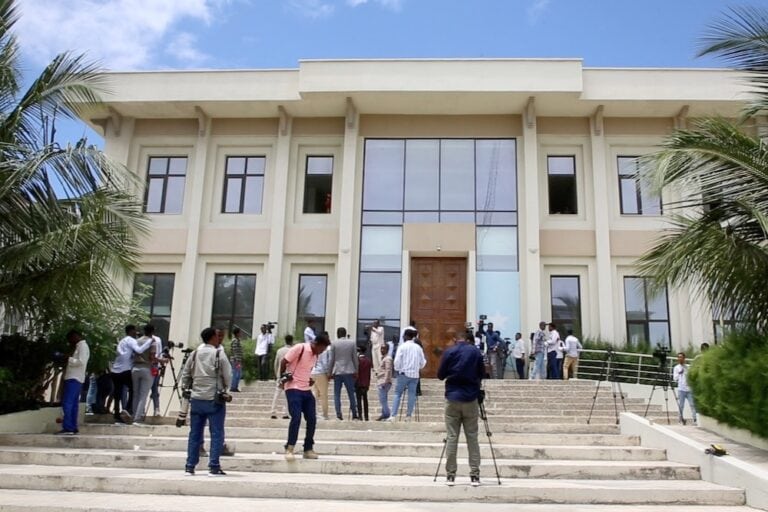
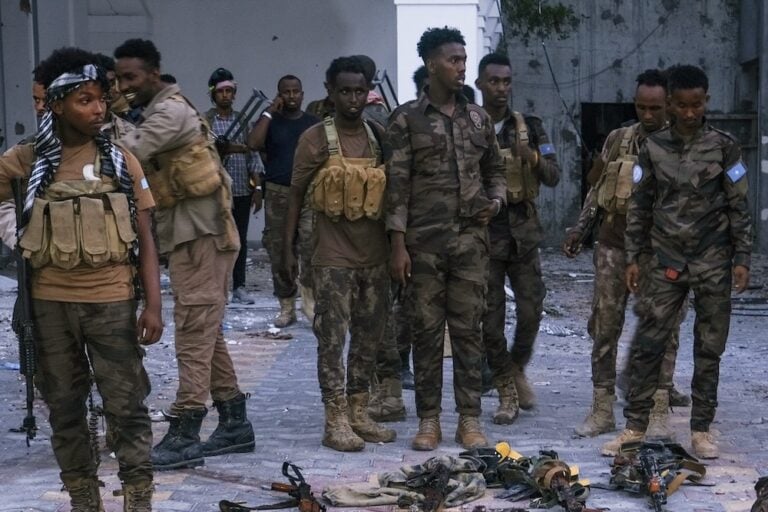
In Somalia, a nation of ever-shifting fortunes, the first few months of 2012 have been particularly deadly for the media.
(IPI/IFEX) – VIENNA, April 27, 2012 – In Somalia, a nation of ever-shifting fortunes, the first few months of 2012 have been particularly deadly for the media. Four journalists have been killed in the war-weary East African state this year – one each month. Only Syria has been more dangerous.
Numerous other Somali journalists have been wounded in or narrowly escaped assassination attempts. Earlier this month, just days after the New York Times ran an article showcasing the peaceful renaissance of Mogadishu, a suicide bomber targeted the reopening ceremony of Somalia’s National Theatre, seriously wounding 10 journalists.
The world is mostly familiar with the suffering of Somalia, which descended into anarchy in 1991 following a decade of civil strife. The collapse also caused the country to split into three parts: the self-declared state of Somaliland in the northeast, semi-autonomous Puntland in the northwest, and the rump state with Mogadishu at its centre.
However, while the trials and tribulations of the Somali people have been well-documented – including a mass famine last year – the current plight of the country’s media has gone largely unnoticed. In commemoration of UNESCO World Press Freedom Day 2012, IPI talked to Mohamed Ibrahim, director of the National Union of Somali Journalists (NUSOJ) and a contributor to the New York Times, to discuss the state of Somali media.
By Scott Griffen, IPI Associate