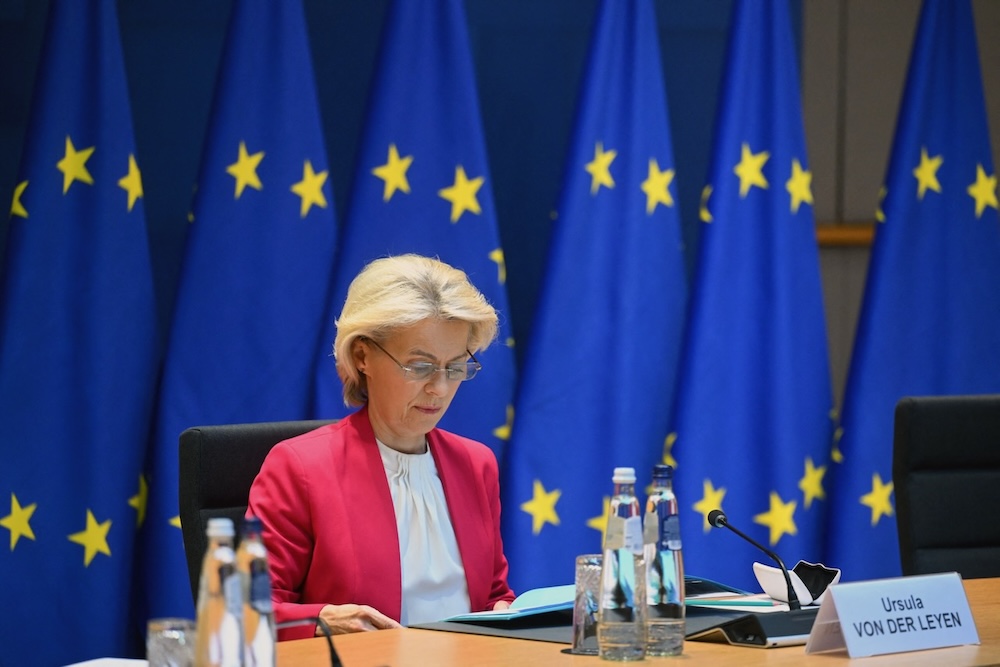
In a joint letter to European Commission President Ursula von der Leyen, IFEX and other signatories said the Commission was obstructing journalists' access to documents they need to scrutinize matters of public importance.
This statement was originally published on cpj.org on 28 October 2026.
The Committee to Protect Journalists on Wednesday joined 15 media outlets, journalist associations and press freedom organizations in urging the European Commission to improve journalists’ access to its documents, warning that delays were harming public debate across Europe.
In a joint letter to European Commission President Ursula von der Leyen, the groups said the Commission was obstructing journalists’ access to documents they need to scrutinize matters of public importance. Journalists face severe delays, denials on questionable grounds, or only receive texts that have been heavily redacted, the letter said. The signatories included a series of recommendations designed to make access easier and faster and the system itself more transparent and accountable.
“The European Commission’s reputation for safeguarding EU democratic values is in peril. At a time when democratic norms are under attack around the world, now is the time to uphold these values,” the letter said.
The full text of the letter follows.
European Commission President Ursula von der Leyen
European Commission
Rue de la Loi 200
1049 Brussels
Belgium
28 October 2026
Dear President von der Leyen,
We the undersigned media outlets, journalist associations and press freedom organizations are writing to urge you to commit to improve journalists’ access to documents held by the European Commission.
Journalists seek to report the facts. As outlined in your State of the Union address in 2025, informed citizens are essential to keeping those in power accountable.
Yet within the institutions of the European Union, the European Commission itself is failing to provide journalists with the documents they need to scrutinize matters of public importance, including financial or political interests which impact the lives of EU citizens.
Journalists’ requests for documents are severely delayed. After huge delays, journalists can be denied access on questionable grounds, or receive documents so heavily redacted that they communicate no clear information. In some cases, the Commission fails to keep and properly archive crucial documents.
Around Europe, public debate is being harmed. Stories which should emerge do not. Citizens cannot make important political judgements at critical moments.
The European Commission’s reputation for safeguarding EU democratic values is in peril. At a time when democratic norms are under attack around the world, now is the time to uphold these values.
We request that the European Commission:
-
- Revoke December 2024 internal rules of procedure that render document access more difficult, and ensure strict implementation of Regulation 1049 on Public Access to EU Documents;
- Publicly disclose on a regular basis figures relating to journalist requests for information, including waiting times for such requests;
- Support the work of the Ombudsman to assess actual harms put forward by the Commission to determine if the decision to not disclose information is necessary and proportionate;
- Create a truly comprehensive, public electronic register of documents, in line with the Commission’s legal obligation under Article 11 and 12 of Regulation 1049. The register should encompass all legislative and preparatory documents, as well as all documents previously released under the access to documents procedure, including metadata, and in a machine-readable format;
- Re-establish an action plan for improving journalist access to information, which would include:
- a) Implementing relevant recommendations brought forward by the Ombudsman in relation to the time the European Commission takes to deal with requests for public access to documents (in her Special Report of the European Ombudsman in her strategic inquiry concerning the time the European Commission takes to deal with requests for public access to documents; OI/2/2022/OAM);
- b) Implementing in full the rulings from the European Court of Justice in relation to access to documents;
- c) Strengthen internal procedures for filing and archiving of relevant documents and improve knowledge, guidance and capacity within the Commission to ensure fast and efficient handling of requests