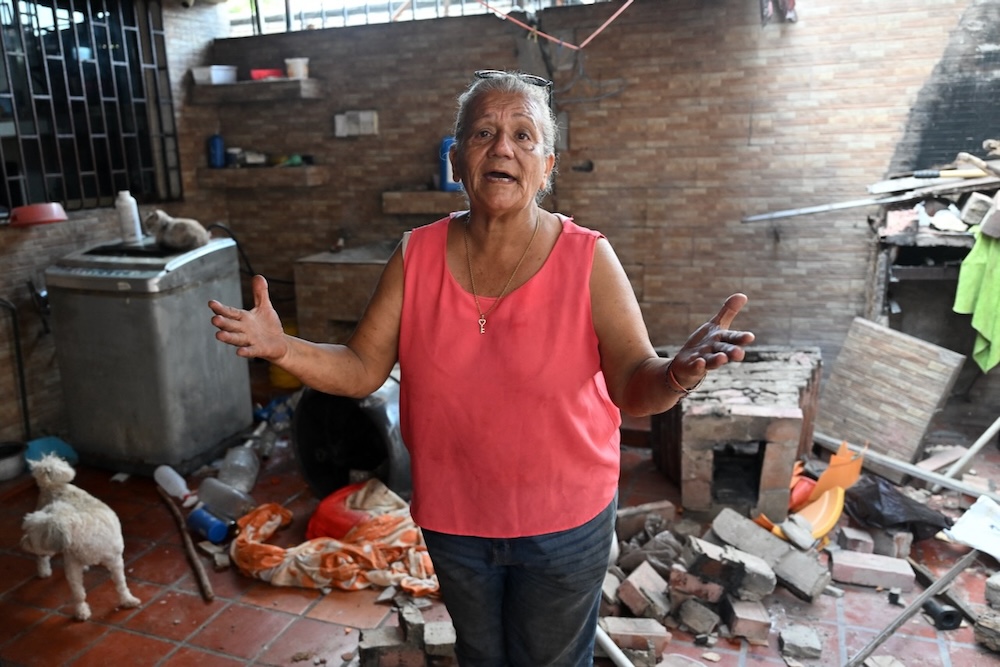
Journalists covering recovery efforts following the earthquake in Venezuela have faced harassment, obstacles in accessing affected areas, and restrictions that impede news coverage.
To the Ministry of the People’s Power for Foreign Affairs of the Bolivarian Republic of Venezuela
Subject: Guaranteeing access to information and the free exercise of journalism during the emergency caused by the recent earthquakes
We, the undersigned national and international organizations dedicated to the defense of freedom of the press and freedom of expression, convey our profound concern regarding complaints that restrictions have been imposed on journalists who seek to report on the emergency caused by the recent earthquakes.
According to information published by the Institute for Press and Society of Venezuela (Instituto Prensa y Sociedad Venezuela), reporters and news teams have faced obstacles in accessing affected areas, thus limiting independent coverage of an event that is undoubtedly of public interest. The National College of Journalists (Colegio Nacional de Periodistas) has also reported instances of harassment and restrictions that impede news coverage and the circulation of information.
Access to timely, independent and reliable information is indispensable during a humanitarian emergency. Restrictions on journalistic work impinge on the right of all people to seek, receive and disseminate information, as recognized under international human rights law. In moments of crisis, transparency and the free flow of information are essential for protecting the populace, coordinating aid and holding public authorities to account.
In this context, we respectfully urge the Venezuelan State to:
- Guarantee that journalists and media outlets, including foreign correspondents and journalists who are duly accredited, can freely, safely and without undue restrictions access areas affected by the earthquakes. To date, coverage of the disaster remains subject to administrative requirements and official authorizations whose procedures are not always clearly defined for journalists working on the ground.
- Adopt measures of support so that journalists and media outlets affected by the emergency can continue to carry out their reporting safely, particularly by ensuring access to the internet and telecommunications infrastructure. In their efforts to continue coverage, journalists are dealing with a severe shortage of protective gear, portable power banks, two-way radios and transportation assistance.
- Unblock websites and online news outlets that are currently restricted so as to ensure that the population is able to access diverse and independent information during the emergency. At least 65 national and international news sites remain blocked within the country, according to the organization Venezuela Sin Filtro.
We trust that the Venezuelan authorities will urgently adopt these measures, in compliance with their national and international obligations regarding freedom of expression and access to information, to ensure that the entire population has unrestricted access to essential information for dealing with this tragedy.
Facilitating the work of the press during an emergency strengthens the institutional response, fosters public trust and protects the right of all people to receive information that is essential for their safety and well-being.
Sincerely,