The Institute of Mass Information recorded 136 press freedom violations in Ukraine in January – August 2026.
This statement was originally published on imi.org.ua on 3 September 2026.
The Institute of Mass Information recorded 136 press freedom violations in Ukraine in January – August 2026, which is more than the figure for the entire year 2025, when IMI recorded 130 cases, as as evidenced by IMI’s monthly monitoring study, the Freedom of Speech Barometer.
READ MORE
IMI found the number of offenses to be growing in two vectors. Russia’s crimes against the media and journalists in Ukraine have intensified, as did the press freedom infringements by Ukrainian actors.
IMI recorded 67 Russian crimes against the media and journalists in the eight months of 2026 — same amount as for the entire year 2025. A previous study has found 67 out of the 130 violations committed in 2025 to be related to Russia’s aggression.
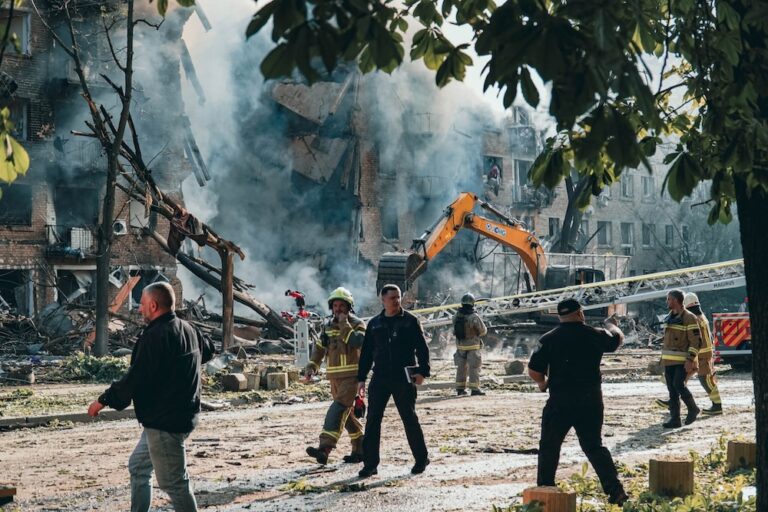
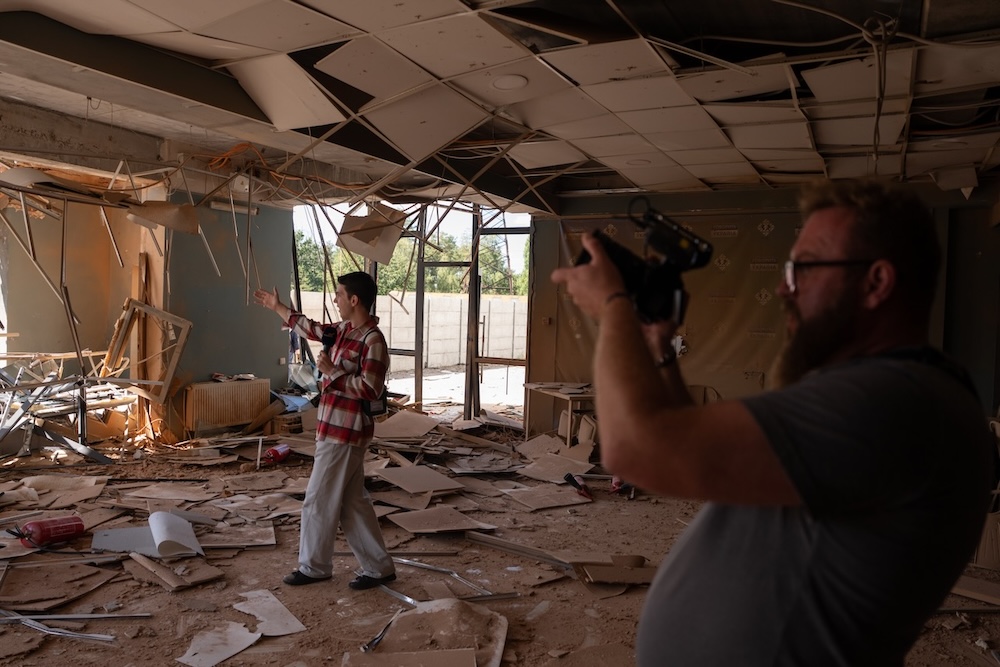
A spike in Russian air strikes damaging or destroying newsrooms and media infrastructure has been noticeable in 2026. IMI recorded as many as 33 such cases in January – August.
Five media offices were damaged in Russian strikes in August alone: Visti Barvinkivshchyny (Kharkiv oblast), Radio na Dotyk (Zaporizhzhia oblast), Visti Novovoronstovshchyny (Kherson oblast), My Ukraina TV (Kyiv city), and Visti (Sloviansk, Donetsk oblast). One more news outlet, Kremenchutska Hazeta, has stopped printing due to the impact of the war.
Russia has committed a total of 971 crimes against journalists and the media in Ukraine since the start of the full-scale invasion, another monitoring study by IMI has shown. As of 24 August 2026, IMI experts have recorded 105 instances of newsrooms being damaged or destroyed, and 338 media outlets have halted operations as a result of the war.
Russian troops continue to target reporters at work in drone strikes. IMI noticed this trend back in 2025, when three media professionals were killed in Russian drone attacks while reporting.
Domestic pressure on the rise as well
The number of press freedom violations by Ukrainian actors has grown as well. IMI recorded 69 such instances in January – August 2026, which is already more than the 63 cases recorded throughout 2025.
Most noticeable spikes in:
- obstruction of lawful reporting — 14 cases vs. 13 in 2025;
- denial of access to information — 14 vs. 11 in 2025;
- death threats to journalists — 9 vs. 5 in 2025;
- judicial pressure — 9 vs. 5 in 2025.
IMI believes intensified judicial pressure on the media and the use of legal mechanisms to chill investigative journalism to be particularly alarming.
In July, the Pechersk District Court of Kyiv has banned Slidstvo.Info, the Anti-Corruption Action Center (ANTAC), and journalist Alina Stryzhak from releasing and distributing an investigation into real estate owned by the State Bureau of Investigation (SBI) director’s brother, Oleksandr Sukhachov. IMI lawyer Volodymyr Zelenchuk has analysed this case as a dangerous precedent which may turn court rulings into a tool of pre-emptive censorship
In August, Dmytro Borzykh, former Deputy Prosecutor General for Military Prosecution, sued ZN.UA and the website’s domestic politics editor Inna Vedernikova over their investigation into the group of so-called “hacker lawyers”. He demanded a retraction of reported information and about 500 thousand hryvnias in court fees. ZN.UA believes the lawsuit bears the hallmarks of a SLAPP.
READ MORE
- Freedom of Speech Barometer for July 2026
- Press freedom in Ukraine 2025 summarised
- Russia has committed 971 crimes against the media in Ukraine
- Court bans on releasing investigations may become a censorship tool
- How to stop impunity for crimes against journalists — IMI’s position
Institute of Mass Information Director Oksana Romaniuk says that today’s dynamic suggests something more than more frequent one-off conflicts with journalists.
“It worries me that the situation has been deteriorating from both sides at the same time. Russia has been increasingly targeting Ukrainian media in kinetic attacks, ruining newsrooms, attacking journalists with drones, destroying infrastructure that is crucial for independent media to work. At the same time we are seeing a spike in domestic pressure: death threats, obstruction, issues with access to information and, most alarmingly, judicial pressure,” Romaniuk said.
She believes that the risk of SLAPP practices spreading in Ukraine demands particular attention.
“Of course, a lawsuit isn’t a press freedom violation in and of itself, every person has the right to go to court. The problem begins where court mechanisms are used to exhaust news outlets financially or to prevent the release of a socially important investigation. And there has been a serious uptick in such cases. Ukraine needs effective anti-SLAPP mechanisms, otherwise litigation may become a means of retaliation against journalists no matter what the court rules,” IMI Director stressed.
***
IMI has been releasing the Freedom of Speech Barometer since 1996. The monitoring study covers violations of journalists’ rights in Ukraine as well as Russia’s crimes against Ukrainian media and journalists.
The Institute of Mass Information (IMI) is a civil society organization specializing in the media, operating since 1996. IMI defends the rights of journalists, studies the media landscape and reports on media-related events, fights propaganda and disinformation, and provides media workers with safety equipment for trips to combat areas (since the start of the Russo–Ukrainian war in 2014).
IMI carries out the only monitoring study of freedom of speech in Ukraine, keeps a list of transparent and responsible online media outlets, and tracks Russia’s media crimes in the war on Ukraine. IMI has representatives in 20 oblasts of Ukraine and runs a network of Media Hubs that provide journalists with unfailing support. IMI’s partners include Reporters Without Borders (RSF); the organization is also a member of the International Freedom of Expression Exchange (IFEX).